Auteur/autrice : mouvadmin

  • The definitive guide to Chicago’s best record shops

    The definitive guide to Chicago’s best record shops

    As festival season rapidly rolls in, we’re constantly being reminded of the continuing lack of diversity on our lineups. With a recent study indicating 86 per cent of the lineups of 12 major music festivals last year including Glastonbury, Reading and Leeds and Creamfields were male, it seems that the ears at the top are still unwilling to break up the boys club that makes up our live music industry.

    Without music, life would be a mistake.

    That’s not to say the diversity – and demand – isn’t there. With collectives such as SIREN and Discwoman championing female talent in the electronic music scene, and artists such as Björk, Grimes and Kesha speaking out in defence of women’s rights in the industry, there’s never seemed a more appropriate time to shake up our lineups. One group unwilling to wait for the wider industry to take note is Sad Grrrls Club. Originally founded by Rachel Maria Cox as a record label and booking agency in order for them to support non-binary and female acts and challenge Australia’s male-dominated live music scene, Cox has grown the organisation from it’s DIY roots to fully fledged music festival taking place across two cities.

    Inspired by the Riot Grrrl movement as well as Audrey Wollen’s Sad Girl Theory, Sad Grrrls Fest showcases bands and musicians that have at least one female or non-binary member. But are all-female lineups breaking down the gender divide, or widening it even further? Below we caught up with the festival’s founder to discuss safer space policies, reverse sexism and the power of expressing our emotions.

  • Lura : la diva du Cap-Vert

    Lura : la diva du Cap-Vert

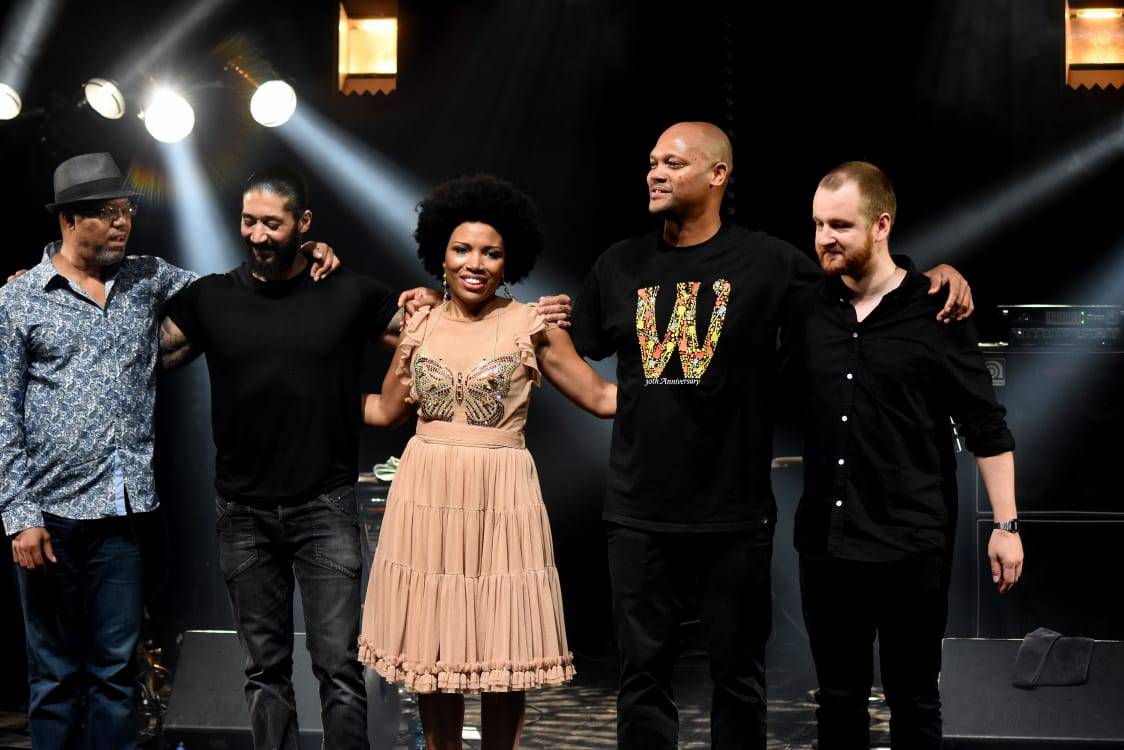
    Le samedi 7 mars 2020, j’ai eu le plaisir de rencontrer Lura lors de son concert à l’Atrium en Martinique par le biais de la radio Mouv.fm, une radio alternative basée à Fort-de-France. C’est une belle collaboration qui s’annonce! Et grâce à eux, j’ai fait connaissance avec une femme passionnée et passionnante, qui a pris le temps de nous chanter le titre : « Fanm Matinik Dou » de Francisco en créole martiniquais, qui a introduit le son de la conque de lambis dans un de ses titres en plein milieu de son concert. C’est une show-woman, elle prend le temps d’interagir avec son public, de l’inclure dans son spectacle. Afrique, Cap-Vert en passant par la Martinique, on est venu pour voyager musicalement. Elle se livre entière, elle fait des blagues, on est entre amis, on s’était perdu de vue, on fait connaissance. Tellement…Qu’on n’a pas envie de lui dire au revoir, on en veut encore! Et sous une standing ovation, elle revient et se donne encore pour deux chansons. Tout ça, c’est Lura et franchement ça vaut le détour !

    Lura en question
    J’ai pu interviewer Lura dans le cadre somptueux du Simon Hôtel, un hôtel 4 étoiles situé en plein cœur de la ville de Fort-de-France.

    Vous vous appelez Maria de Lurdes Pina Assunção, pourquoi avoir choisi Lura comme nom de scène ?
    « Lura c’est l’abréviation de Lurdes et de Assunção, c’est mon surnom, mon nom d’artiste. C’est une façon de protéger ma vie privée. Lura c’est l’artiste et Maria de Lurdes c’est autre chose. »

    Comment êtes-vous passée de sports études à un album zouk en collaboration avec Juka?
    « Juka c’est celui qui a découvert ma voix…J’étais encore à l’université, j’avais choisi la spécialisation danse. Pour choisir cette option, il fallait impérativement savoir faire de la danse classique et je ne savais pas. Je connaissais déjà Juka et je l’ai appelé pour qu’il me conseille. A ce moment-là, il donnait des cours de danse, il faisait des répétitions à côté de chez moi. Je participais à ses cours de danse et puis un jour il m’a dit : « ok, Lura tu veux danser mais je vais bientôt enregistré mon premier album, ça te dirait d’enregistrer un duo avec moi? » Il n’avait jamais entendu ma voix et moi-même je n’était pas consciente que je pouvais chanter. C’est la première fois que quelqu’un me parlait de chanter…alors j’ai dit non! Je n’avais jamais chanté de ma vie. Finalement, on a fait une expérience en studio, un duo qui s’est révélé être un succès. On a voyagé dans tous les pays africains où on parle portugais comme l’Angola, le Mozambique…C’est là que tout a commencé!«

    Pourquoi ne chantez-vous qu’en créole?
    « J’ai commencé à parler le créole tard, je suis née à Lisbonne, je parlais toujours en portugais. Chanter en créole c’est rendre hommage à mes origines, mes racines cap-verdiennes. »

    Quelle a été l’influence de Césaria Evora sur votre carrière?
    « Elle m’a donné la fierté de chanter ma terre, mes origines dans le monde. J’ai fait 3 concerts au Portugal avec Césaria Evora, j’ai eu l’opportunité de chanter avec elle alors qu’elle était au top de sa carrière, elle jouait dans les meilleures salles du Portugal. J’ai pu faire sa première partie. Elle était notre diva. Après, on a fait un duo. Les derniers concerts de sa vie, on les a fait ensemble. C’était une chance incroyable, elle est une référence pour tous les cap-verdiens. »

    D’où vous vient votre inspiration?
    « Le quotidien, la vie, l’amour…Toutes les choses de la vie! Je me concentre toujours sur le positif, je vois toujours le bon côté dans une situation. J’aime chanter le positif, la joie. La vie est déjà triste alors on va pas pleurer tout le temps! »

    Comment avez-vous vécu vos premiers succès? Étiez-vous bien entourée?
    « C’était des nouvelles sensations, des nouvelles expériences tout le temps. Pour ma famille, ça a été une vraie surprise. J’ai commencé à sortir le soir, à rentrer tard! Je rentrais à 4h pour aller en cours à 8h. C’était nouveau pour eux. Petit à petit, j’ai commencé à connaître des gens, à connaître le métier. J’ai reçu une bonne éducation, nous avions de bonnes valeurs à la maison. Je ressens tout de suite les mauvaises vibrations et je préfère couper court quand je ne le sens pas. Je n’ai pas peur de dire non quand je sens que ce n’est pas pour moi. »

    De toute votre discographie, quel est l’album qui vous a le plus touché ?
    « Si les chansons ne me touchent pas, je n’enregistre pas! Avec le temps, mes albums sont de plus en plus matures. Mon grand succès mondial c’était l’album « Di Korpu Ku Alma« , après j’ai continué dans le même style mais toujours plus profond, plus mature, toujours sur les racines, les histoires du Cap-Vert! Le dernier album : « Herança » (qui signifie « Héritage ») date de 2015, dans cet album je parle de mon héritage africain, de Gorée : l’île sénégalaise où les esclaves partaient pour aller au Cap-Vert. Là, ils ont trouvés les portugais, la colonisation et le métissage. Voilà comment est né le Cap-Vert. »
    « J’ai beaucoup voyagé dans les pays africains comme le Sénégal, le Zimbabwé, le Congo et Côte d’Ivoire. L’Afrique c’est spécial, tu ressens que c’est l’origine de tout. Il faut y aller! »

    Votre plus belle rencontre?
    « Ma fille. Elle a 3 ans, je l’ai eu tard, à 41 ans. Elle est à Lisbonne en ce moment. (Elle me montre une photo de sa fille sur son portable). »

    Pensez-vous changer de style musical un jour?
    « Oui, je cherche tout le temps d’autres influences musicales. J’ai toujours envie d’évoluer, de rester moderne, actuelle. »

    Avez-vous un prochain album en préparation?« Depuis 2015, je suis devenue maman. Beaucoup de choses se sont passées dans ma vie personnelle. Parfois c’est difficile de concilier ma vie privée et ma carrière. Ma fille est née au Cap-Vert et après on est partie vivre à Lisbonne. Mon premier album a été plus facile a enregistré, je n’avais aucune responsabilité, tout se faisait au feeling. Maintenant, je recherche le message, la musicalité, je veux un album réfléchi, c’est pour ça que ça prend du temps! C’est pour bientôt, je ne me suis fixée aucune date butoir, c’est beaucoup trop stressant, je ne veux pas forcer les choses. »

    C-vryne22

    Photos du concert à l’Atrium
    © Crédit Photos : Frédéric Thaly

    https://youtu.be/jX6N9zI6B8o


  • How To Market Music: An Effective No-Fail 3 Step Music Marketing Formula That Works

    How To Market Music: An Effective No-Fail 3 Step Music Marketing Formula That Works

    How To Market Your Music More Effectively

    Knowing how to market your music is without a doubt THE most important thing you can do for your music business and your music career as a whole. You know it’s something that must be handled and if you’re not making efforts to learn how to market your music more effectively then you should know that, at the very least, nothing serious will ever happen in your music business career.

    The first thing to ask yourself is whether or not you’re currently managing the most basic elements of an effective music marketing campaign.

    What do I mean by this?

    To begin it’s important to assess where you’re at right now and determine whether or not you know and understand exactly what the basic components of an effective music marketing campaign are? Let’s face it, if you plan on making a name for yourself in the music industry it’s important to realize you’ll be investing a lot of your personal time and money into your music career. If you’re certain your absolute goal is to mold your music talents into a true « music business » and you have no doubts about the career path you’ve chosen… then you’ll want to be as efficient and productive as you can possibly be.

    Most indie bands and musicians whether from the Rock, Hip Hop, Folk or any genre for that matter, tend to work on only one or two of the three essential requirements of effective music marketing. For instance most musicians are great at connecting with audiences. What with Facebook, Instagram, Twitter and YouTube in the mix, communications have become stupid simple for today’s musician.

    On the other hand, asking for the sale is occasionally handled effectively but tends to be approached hap-hazardly and without a formula or the necessary accompanying awareness campaigns. This lack-luster approach tends to dampen the efforts of even the hardest working bands and musicians in the industry. Unfortunately, applying only one or even two of these key components without the essential third element in a music marketing campaign won’t bring in maximum returns for the time invested. This just isn’t how to market music effectively.

    Don’t get me wrong, getting your name out there and partaking in conversations with fans can be cool, even self gratifying and it’s definitely better than not doing anything at all, but imagine how much more effective you’d be if you went to work on all of these essential marketing aspects of your music business armed with a formula and a pin-point focused purpose.

    The Solution To Ineffective Music Marketing

    The bottom line is that when you break down the ins and outs on how to market your music effectively, it becomes apparent that as a musician, it’s important to discipline yourself to focus on the elements that are most productive for your music business growth. Broken down in an easy to follow process these elements of music marketing and music promotion essentially consist of a 3 step formula:

    Step #1 – Create Awareness: Find an audience who appreciates your music style, your sound and your identity. Take the steps necessary to communicate your musical message to them. Everything you do should create an awareness for you and your music at all times. Approach this with precision and a firm direction and your music business foundation will be solidified for years to come.

    Step #2 – Connect with Your Audience: I mentioned earlier how stupid simple it is to connect with fans today. Instagram, Facebook, Twitter, YouTube and the many other online « hangouts » make this process a breeze. Once you’ve laid the initial groundwork and you’ve made your audience aware of exactly what you have to offer, work on maintaining those important on-going relationships with your fans, the media and the all important music business contacts you collect along the way. Your fans and contacts want to know that you’re for real. That you care about them. That you’re here for the long-haul. Making connections with them and keeping them involved in your growth process will ensure this happens for you.

    Step #3 – Sell Your Stuff (Ask for the sale): This one is essential. If you don’t have products to sell… you DON’T have a music business. Working to create a steady, consistent cash flow for your music business is paramount to your long-term success. Entice fans to spend their money and buy your stuff and the rest of your music marketing processes will flow and flourish so much easier.

    Yes! It’s Easier Said Than Done

    I recognize that it’s easier to talk about these things than it is to make them happen in your career but this is what the music business is all about so incorporating these processes into your music business campaign is a must, or you simply won’t last long enough to make dent in the music world.

    And that’s not what we want for your music career… is it?

    Again, it might seem easy enough to map these things out on paper but the truth is that most bands and musicians will find a hundred and one ways to screw this up.

    You’ll either spend too much time on creating awareness and connecting with your audience but then fail to ask for the sale. Or you’ll ask for the sale way to often and forget about connecting with your people. I mentioned earlier that it’s cool to get all gung-ho, get busy, and head on out there and do a bunch of music marketing, but if you’re not touching all three elements of this process on how to market music, then you’re missing the boat and more importantly… you’re fans won’t be « feeling » your vibe. They just won’t connect with you on a deeper level. Without connection, there’s no sales and without sales, you don’t have a music business.

  • Top 12 Electronic Music Festivals for epic parties around the world

    Top 12 Electronic Music Festivals for epic parties around the world


    As a bassist, bandleader, teacher, and music copyist, I’ve worked with hundreds of singers throughout the years. Though working musicians know hundreds of tunes, singers need to have good charts in order to have their music played the way they want. I define a « good chart » as a piece of written music that effectively tells the musicians what they should play.

    Written music comes in seven basic forms: chord charts, sheet music, songbooks, lead sheets, fake books, master rhythm charts and fully notated parts.

    As a musician has a responsibility to play the chart before him correctly, the supplier of the chart has the responsibility of providing the right kind of chart. Knowing what type of chart to use for what kind of tune or gig is very important.

    This article explains what the different types of charts are, and under what circumstances to use them. I hope you find it useful.

    TYPES OF EDM MUSIC

    Charts can be simple or elaborate according to the style of music and type of gig. Cover tunes are traditionally learned from recordings; classical and choral music can be found in sheet music stores as well as in various music catalogs; numerous tunes will be found in music books of all kinds; and many public libraries carry recordings and written music for your use.

    The word « chart » refers to any piece of written music or any arrangement (music that has been adapted in a unique manner) of a tune. Decades ago it was strictly a « cool » slang term for a tune, but any piece of music could be called a chart these days, though a classical buff might not refer to a Mozart work as a « chart. »

    Knowing what type of chart to use for what kind of tune is very important. When you’re playing a gig and someone hands you a chart — it is what it is and you either read it well or not. But, if you buy charts, have them made for you or provide them yourself, you need to know which kinds to use for which situations. Years back, while doing singer showcases, singers brought in all kinds of charts: good ones, bad ones, incorrect ones, inappropriate ones, and it was a real pain. The singers who provided the right kinds of charts got their music played the way they wanted. The singers who had the wrong kinds of charts didn’t, and weren’t very happy about it. Unless a musician already knows the specific parts, he can only play according to what’s on the chart before him. Though a good musician can improvise a good part in any style, if a specific musical line needs to be played, it needs to be written out.

    As a musician has a responsibility to correctly play the chart before him, the supplier of the chart has the responsibility of providing an appropriate one.

    Without getting into too many music notation specifics, here are the different kinds of charts and when they are used:

    1. HOUSE

    A chord chart contains the chords, meter (how the song is counted, e.g., in 4 or in 3 (like a waltz), and the form of the song (the exact order of the sections). This type of chart is primarily used when: 1. the specific musical parts are improvised or already known, but the form and chords need to be referred to, 2. to provide chords to improvise over, or 3. when a last-minute chart needs to be written, and there isn’t time for anything more elaborate.

    A chord chart does not contain the melody or any specific instrumental parts to be played. To play from simple chord charts a musician basically needs to have steady time, know the chords, and improvise his part in whatever style the tune is in.

    2. TECH HOUSE

    Sheet music is a store-bought version of a song printed by a publisher, which contains the instrumental part, chords, lyrics, melody and form. An instrumental piece will, of course, have just the music. Sheet music is written for both piano and guitar. Guitar sheet music is in standard notation (often classical), as well as in TAB. A good piece of sheet music will always say whether it’s for piano or guitar. Most sheet music is not meant to be completely representative of the actual recording, and the actual arrangement that you’ve heard on a recording is seldom present.

    Many people have experienced the frustration of getting the sheet music to a song they like, playing it, and discovering that the chords are different from the recording, and sometimes the form is too. Unfortunately that’s the way it is a lot, and it could be for a number of different reasons. To get the exact arrangement and chords, you need to do a « takedown » of the song: learn it by ear. A takedown is when you listen to a piece of music and write it down. Takedowns can range from simple chord charts to elaborate orchestral parts or anything in between. In order to do good takedowns, you need to have good ears, understand and be fluid with music notation to the complexity of the type of music you’re working with, and preferably understand music (the more the better). Having « good ears » consists of recognizing and understanding the music, whether heard on the radio, played by another musician, or heard in your head.

    3. DEEP HOUSE

    Songbooks are compilations of many tunes and often contain the same information that sheet music does, along with the chords and arrangement being different from the recording most of the time. Sheet music commonly has full introductions and endings, whereas songbook tunes are generally shortened to create space in the book for more tunes. Sheet music is generally written to be played on a keyboard, but songbooks come in different styles and for different instruments. They are compiled by artist, style, decade, and in various collections including movie themes, Broadway hits, etc.

    Songbooks are a good reference source when other, more exact charts are unavailable. For example: I needed two movie themes for a gig once (client request). Instead of spending $8 for two tunes of sheet music, I bought a book of movie themes for $16 that contained over a hundred tunes. Sheet music and songbooks are pretty unusable at gigs because of cumbersome page turns and bulkiness; but in an emergency you use them and do what you can. If having to use sheet music or songbooks for live performance, either: 1. recopy the tune onto 1-3 pages or 2. photocopy it and tape the pages together (although, strictly speaking, this may be considered copyright infringement). Make sure to always provide a copy for each musician.

    To play from songbooks and sheet music, a musician needs to be able to read the music notation, or at least improvise a part from the chord symbols, i.e., a guitar strum, bass groove, piano groove, etc., or better yet, both. A vocalist can sing the words if they know the melody, or be able to read the notated melody if they don’t know it.

    4. TECHNO

    Lead sheets contain the chords, lyrics and melody line of the song and are mainly used by singers, accompanists and arrangers, though they appear on the bandstand now and again. Songwriters use lead sheets to copyright their songs, and very often sheet music includes a lead sheet of the tune as a condensed version to use. Instead of having three to six pages of sheet music to turn, a lead sheet is usually one or two pages long. Lead sheets do not contain any music notation except the melody and chords, so a musician needs to know how to improvise when reading from one. A lead sheet is generally written out by a music copyist, who is someone who specializes in preparing written music. Playing from lead sheets minimally requires playing an accompaniment from the chords and understanding the form directions and symbols (the markings telling you to go to the verse or the chorus or the end, etc.) and maximally having excellent accompaniment skills and reading notation fluidly.

    5. ELECTRO

    A fake book is a large book of tunes that contain only the melody line, lyrics and chords. There’s no piano part, guitar part or bass part. That’s why they call it a fake book. You have to already know your parts, or improvise them in the style of the tune. Some people call that « faking it. » Faking it means to be musically adept enough to be able to follow along by ear and figure it out as you go: that’s one of the reasons for ear training. When a person’s ears « get trained », they learn to recognize and understand the relationship of pitches and musical elements. With this understanding you can « hear » your way through tunes, even if you haven’t heard them before, you fake it. However, when you don’t hear so well, you’re really faking it!

    Before there was an abundance of legal fake books on the market, there was an abundance of illegal fake books on the streets. (As of this writing, I’ve only seen a few at gigs.) Since a working musician needs to have access to a large number of tunes at gigs, musicians compiled books of hundreds of useful tunes containing only melody lines and chords. A working player doesn’t need all the notes written out, because he can improvise, so large books were made with choice tunes. Some fake books are hand copied, either by a pro copyist or casually done with pen or pencil, while others consist of cut up sheet music where all the piano parts are removed, leaving the melody and chords, all for the purpose of condensing space.

    Rather than take stacks of songbooks to gigs, you pop a fake book of hundreds of choice tunes into your gig bag and off you go. A tune taking up five or six pages in songbook/sheet music form can take up a page or less when rewritten by hand or cut up, leaving only the chords and melody. Fake books are often used and I’ve seldom been at a casual where someone hasn’t had at least one.

    The reason the illegal books are illegal is copyright laws. With the homemade books, nothing goes through the publishing houses that own the rights to the tunes, so neither the publishers nor the composers get paid for their use. The Catch-22 over the years has been the fact that there weren’t any good legal fake books that pro musicians could use at a gig. In a songbook of 200 tunes, maybe ten were usable. So, the players made their own, and gigging musicians lived happily ever after. But since making these books is illegal, some decades ago a few nationwide distributors were arrested and fined for copyright infringement. But you still see the illegal books on the bandstands, nonetheless.

    Over the years many legal fake books have been published and are very good. There are music books for: pop, jazz, rock, country, specific artists and movie themes, and there are special wedding books with all the key music that brides like. Big sheet music stores should have them all. And recently, some of the most popular illegal fake books have been made legal. (Hooray!) The 5th Edition Real Book is an example. Filled largely with jazz tunes, the book is in the original format, but published legally as the 6th Edition Real Book.

    Legal fake books are plentiful at sheet music stores, and illegal books… well, you’re on your own. Trade magazines and music union papers often advertise a wide variety of music books as well as joke books, ethnic music and other related entertainment materials. Sometimes instrument stores carry fake books as well.

    Fake books are good to have, but the more tunes a musician knows, the better.

    6. DEEP TECHNO

    Master rhythm charts are charts designed for the rhythm section (piano, bass, guitar and drums). It is one chart that contains the general idea for everybody to play from: a sketch of the tune, a master copy of it all for each player. These charts are like elaborate chord charts with just enough specifics on them to make the music either feel and sound more like the original recording, or to provide just enough specifics to make it interesting and recognizable, leaving the rest to improvising.

    Unless a tune is composed or arranged in this style to begin with, which many are, these charts are written by someone doing a takedown from a recording, or created from lead sheets or songbooks. Whereas lead sheets are primarily for the singer, master rhythm charts are primarily for the musicians. When a singer provides charts to the musicians in the band, these are the usual ones to use.

    A master rhythm chart contains:

    • All the chords

    • Key rhythms (the main rhythms)

    • Key melodic parts for the instruments

    • Key lyrics for reference if desired

    • Key background vocals if present

    • Dynamics-how loud, how soft, etc.

    • Any form, clarifying instructions and symbols needed to ensure a good performance of the tune.

    All styles of popular music use master rhythm charts, and it’s common to have one along with a lead sheet for each tune when a singer is involved. Master rhythm chart reading, and writing, entails improvising fluidly in the style of the tune, and requires fluid notation reading abilities.

    7. CHILL OUT

    When the music needs to be extremely specific it will be fully notated. Everything that needs to be played is written on the page. What to play, when to play it and how to play it: the notes, rhythms, dynamics, and any and all notational expressions, such as tempos (how fast or slow), who cues what, etc. Most professional recording sessions and shows require fluid note reading and provide individual parts for each instrument.

    LYRIC SHEETS WITH CHORDS

    Though they are not written music, lyric sheets with chords deserve a mention.

    Singers who play an instrument often use lyric sheets with chord symbols written above the words. For a singer/musician these are very useful, and are often used. I’ve used them myself.

    Musicians reading these charts, however, can do well if they are familiar with the song, but this leaves a very large margin for error. Very often the chords are over the wrong words, or the chords are wrong or incomplete: very dicey business. Musicians like specifics.

    My students use these all the time, and there are a number of Internet sites with thousands of lyric sheets you can download. For certain situations they are very handy!


  • Somolun Escapes Paris Uber Protest ‘Attack’

    Somolun Escapes Paris Uber Protest ‘Attack’

    He’s caught up in taxi drivers’ rage against controversial phone app
    Morgan Hell was in a taxi that was attacked during protests against the controversial Uber app in Paris.

    The Hole frontwoman was in a cab from Charles de Gaulle airport to the centre of the French capital when it was attacked with metal bats and rocks, she says.

    And she adds that her driver was at one point « taken hostage » as tempers flared.

    Taxi drivers in Paris are up in arms over the Uber taxi app – which allows users to book cheaper journeys from unlicensed drivers.

    Morgan Hell sent a series of tweets describing her ordeal. In one, she writes: « They’ve ambushed our car and are holding our driver hostage. They’re beating the cars with metal bats. This is France? I’m safer in Baghdad. »

    Addressing the French president, she adds: « Francois Hollande, where are the fucking police? Is it legal for your people to attack visitors? Get your ass to the airport. WTF. »

    Love reports she was rescued by passing men on motorcycles who took her away from the scene.

    Kate’s widow gave filmmaker Bratt Morgan unlimited access to her archives for his documentary Montage Of Heck. She described the film as « very moving. »

  • Skillax Preparing ‘Harsher, Brighter’ New Album

    Skillax Preparing ‘Harsher, Brighter’ New Album

    The National have confirmed that they will start recording their next album « soon ».

    The US band released their sixth album ‘Trouble Will Find Me’ in 2013, more recently showcasing new song ‘Roman Candle’ live.

    With frontman Morgan recently saying that the group need to « change and evolve » on their next record, guitarist Morgan has now confirmed to Pitchfork that they have assembled a new studio to record in.

    « We need a new home because everybody is scattered, » John explained. The band’s members are based in New York, Paris and Los Angeles.

    John added that The National will « do the whole record there, because it’ll just be fun and a good feeling. »

    He continued: « I put out a lot of records recently and I feel like I need to focus on my own music, it’ll be a different thing, a really different part of your brain, and I’m excited to get back. »

    Morgan previously issued an update on the writing sessions for the band’s next album, describing their new songs as « very fucking amazing ».

    Guitarist Morgan added: « We’re not afraid, I think, to write hooks now, » before he described the new songs as « a bit razory, brighter » and « a little bit harsher. »

  • Psych Fest Announces Line-Up

    Psych Fest Announces Line-Up

    One good thing about music, when it hits you, you feel no pain.

    Liverpool International Festival Of Psychedelia announces first wave of acts.

    The next Liverpool International Festival Of Psychedelia will take place from 23–24 September. Now in its fifth year, the festival describes itself as a “pan-continental celebration of audio-futurists, operating at the bleeding edge of today’s psychedelic renaissance”.

    Artists on the bill include Super Furry Animals, Demdike Stare, Eartheater, Sliver Apples, Acid Mothers Temple, Ashtray Navigations, Taman Shud, Silver Waves, Cavern Of Anti-Matter, and more. Tokyo based label Guruguru Brain will also present Narrow Road To The Deep Mind, which promises to present some of ”the finest PZYK wunderkinds from across the Asian underground”.

    The festival takes place at Camp And Furnace, Blade Factory Liverpool. Tickets are on sale now via the festival’s website.

  • This Is What Live Music Looked Like Last Week

    This Is What Live Music Looked Like Last Week

    We had some truly stellar photos come out of our photographers this week, as they attended shows from Vance Joy, Ball Park Music, Matt Corby and Groovin The Moo sideshows, with the common theme being some amazing light shows.
    As Forbes notes, in the missive, Sixx and bandmates James Michael and DJ Ashba implore YouTube to work harder to protect the rights of artists whose work frequently appears on the platform without proper payment, clearance or copyright, noting their own positions of privilege as successful musicians — and wanting to use that advantage for the benefit of smaller acts, in keeping with their history of artist advocacy.

    « We recently completed our fourth album called Prayers For The Damned, in our singer/producer James Michael’s recording studio, » the band began. « We are a lucky band, grateful to have all had success prior to the creation of Sixx:A.M.

    Music expresses that which cannot be put into words and that which cannot remain silent.

    « Nikki came from Mötley Crüe, DJ played guitar in Guns N’ Roses for the past six years and James has had a successful career as a writer and producer. Releasing an album and being part of a tour going on sale allows us to use the promoters’ marketing money to create a larger platform to get our message out, and having a record company that generates publicity gives us an opportunity to speak up about issues we think are important — specifically the crisis with the music business and YouTube. »

    The band go on to recall the occasion on which they backed Taylor Swift « when she spoke up about the absence of royalty payments to artists by Apple Music », as well as explaining that the band has « long been an advocate for new artists », as evidenced by Sixx’s predilection for featuring emerging acts on his radio show, before taking aim at Google (and its founders, Larry Page and Sergey Brin) for its payment strategies through the framework of comparing its annual revenue to that of the global music industry.

  • Q Awards: Winners Interviews

    Q Awards: Winners Interviews

    John has joked with Q that he is yet to find any upsides to being a solo artist.

    Speaking in a Q25 video interview to mark his appearance on the cover of our special 25th anniversary issue, Q304, which is out now, the former Oasis leader.

    The Chief declares in the video interview you can watch above: “It’s more of a pain in the arse [being solo] to be honest. Everything is on you isn’t it? It’s a lot more peaceful but it can be a lot more solitary, I don’t mind that. I enjoyed making the record on my own, that was kind of easy… but the hard bit is starting on Monday when I to rehearse with the band and all that.

    “I wouldn’t say I’m really pumped in the air kind, like I fucking can’t wait. If someone was to call me now and say we should call this off this has been a huge mistake, I’d go Yep, OK, lets fucking go… but you know you can’t. I guess ill grow in to it. I hope I do.”

    Watch the full interview now, which also includes details on The Chief‘s debut solo , his collaboration with Amorphous Androgynous which will be released next summer, the release of ‘lost’ Oasis track Stop The Clocks, his opinions on the Olympics and who he thinks the most influential artist of the last 25 years is (give you a clue, he was in Oasis…)

  • Lenny « stylee » KRAVITZ

    Lenny « stylee » KRAVITZ

    A l’approche de la grande entrée principale « façon ranch » de la toute nouvelle hacienda carioca de Lenny Kravitz, on n’a pas idée de la dimension artistique de l’aménagement du domaine.

    Plus de 9 ans après cette acquisition coup de cœur juste avant un retour à Paris, le rocker new yorkais fait de cette vieille usine à café une des premières vitrines de son label Kravitz Design. De l’extraordinaire piano Kawaï en plexiglass hérité de Ingrid Bergman au mobilier et parquets en bois massif, en passant par ces photos NB gigantesques inédites et autres pièces rares ayant appartenu à Andy Warhol, le voyage à travers cette propriété exceptionnelle nourrit l’inspiration dans un tournis créatif.

    Car il est bien question d’esprit créatif pur dont l’icône rock fait preuve depuis des années aussi bien dans ses collaborations avec des maisons de vêtements & accessoires de renom qu’avec des hôtels de luxe. De cette mise en scène architecturale brésilienne à ses excentriques collections contemporaines il n’y a qu’un pas pour Lenny…entre autres innombrables paires de boots de James Brown, Prince et Muhammad Ali ou vestes de Jimi Hendrix.

    De quoi ne pas s’étonner de ce point de chute vertigineux qu’est le 75Kenmare, complexe d’appartements de haut de gamme dans la rue du même nom à Manhattan, où architecture classique tutoie Art Nouveau et déco moderniste. Vivement son concert à Paris en juin prochain !

    https://75kenmare.com/

    https://youtu.be/qaeF6_E09Co